
Are you tired of your high-quality video content being held back by mediocre, soul-less background tracks? In 2026, finding the best AI music generator is the definitive boundary between a generic social media clip and a professional masterpiece.
Every YouTuber chasing a viral hook and every brand manager building a sonic identity needs a tool that treats audio as a dynamic design surface rather than a static afterthought. This guide cuts through the noise to rank the top AI music generators currently redefining the creative industry.
TL;DR: 10 Best AI Music Generators in 2026
- Best Overall: Suno creates complete AI songs with the strongest balance of voice quality and editing depth.
- Best for Creative Exploration: Udio gives users more room to test unusual styles and build expressive song ideas.
- Best for Simple Song Creation: InsMelo turns a short idea into usable music through a clean and beginner-friendly workflow.
- Best for Composition: AIVA works best when the project needs structured instrumental music.
- Best for Background Music: Soundraw helps users create practical tracks for content that needs a clean sound bed.
- Best for Scalable Music Generation: Mubert fits projects that need fresh music on demand.
- Best for Video Scoring: Beatoven.ai creates music around mood and scene direction.
- Best for High-Quality Audio: ElevenLabs Music brings strong sound generation into the AI music space.
- Best for Fast Commercial Tracks: Loudly helps users create usable music with a short production path.
- Best for Music Ideation: BandLab gives users AI song ideas inside a broader creation workspace.
Quick Comparison Table
Before reading the detailed reviews, use this table to compare each platform at a glance. It summarizes the free plan, best use case, standout feature, and licensing model of each AI music generator, so you can quickly narrow down the tools worth testing.
| AI Music Generator | Free Plan | Best For | Key Feature | Licensing |
| Suno | Yes | Full song creation | Suno Studio with stem editing | Commercial rights on paid plans |
| Udio | Yes | Precise song refinement | Inpainting and song extension | Check current download terms |
| InsMelo | Yes | Lyrics to song creation | Text, lyrics, and image to music | Royalty-free commercial rights |
| AIVA | Yes | Cinematic composition | MIDI and stems export | Pro plan gives full rights |
| Soundraw | Limited | Customizable instrumentals | Song Structure Editor | Paid plans include commercial use |
| Mubert | Yes | Streaming and content music | Real-time music generation | Depends on selected plan |
| Beatoven.ai | Yes | Emotion-driven video soundtracks | Maestro mood-based generation | Royalty-free on paid plans |
| ElevenLabs Music | Limited | Realistic vocals | Voice-led music generation | Commercial use on paid plans |
| Loudly | Yes | Stem-based track editing | Stem downloads and distribution | Royalty-free on paid plans |
| BandLab | Yes | Collaborative music projects | Browser-based DAW with SongStarter | Depends on final use |
How We Chose the Best AI Music Generators
Choosing the best AI music generator is not only about how impressive the first result sounds. Some tools can create a catchy preview, but the real difference appears when the track needs to be edited, downloaded, or used in a public project.
The demand for usable AI music is also growing fast. IFPI reported that global recorded music revenue reached US$31.7 billion in 2025. Deezer said almost 75,000 AI-generated tracks were uploaded to its platform each day in April 2026. With that much AI music entering the market, quality and licensing matter more than ever.
The tools in this guide are selected based on the following standards:
- Audio Quality: The music should sound clean and natural, with a stable mix from start to finish.
- Vocal Realism: For any best AI song generator, the voice should feel believable rather than robotic.
- Creative Control: A strong platform should make it possible to refine the first result instead of starting over every time.
- Ease of Use: The workflow should help users move from an idea to a finished track without a steep learning curve.
- Commercial Licensing: Clear usage rights are important when music is used for public or paid projects.
- Feature Depth: The best AI music generators should offer more than basic text to music, especially when users need editing tools or export options.
Note: Pricing and licensing details were checked in May 2026. Because AI music platforms update their plans frequently, users should review each platform's current terms before publishing or monetizing generated music.
With these standards in mind, here are the best AI song makers worth comparing in 2026.
10 Best AI Music Generators of 2026
Now that the main selection criteria are clear, let's take a closer look at the tools that stand out in 2026. Each AI music generator below has its own strength, so the best choice depends on the kind of music you want to create.
Suno
Suno is one of the strongest names in AI music because it focuses on full song creation instead of short audio clips. You can start from a text prompt, use your own lyrics, or upload an audio idea, then turn that input into a complete track with vocals, melody, and arrangement.
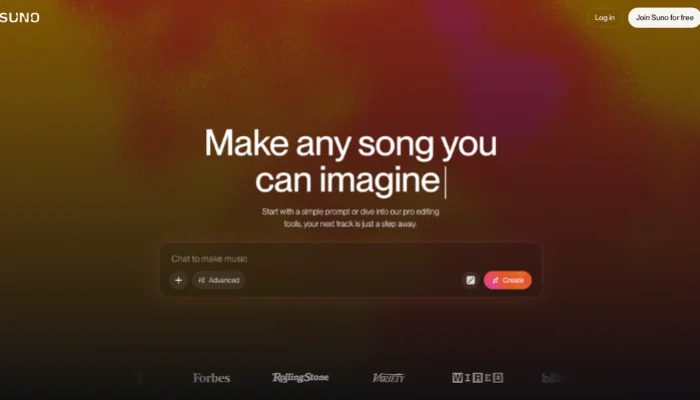
What makes Suno stand out is its Studio workflow. It feels closer to a lightweight music workstation than a simple text to music tool. Users can work with stems, refine sections, experiment with style, and keep shaping a track after the first result appears.
For anyone asking "is Suno the best AI music generator", Suno is one of the clearest answers for complete songs. It has strong vocal realism, broad genre support, and deeper editing options than many tools in this category.

Pricing
Free: $0 per month, includes daily credits for non-commercial use
Pro: $8 per month with annual billing, or $10 per month
Premier: $24 per month with annual billing, or $30 per month


My Personal Verdict: My tests showed Suno V4 leads the market in vocal emotional depth, though heavy metal tracks still require manual cleanup to remove minor 'metallic' artifacts.
Udio
Udio is built for users who want to create and refine songs through iteration. It can generate songs from prompts, lyrics, or poetic text, and it gives users several ways to reshape the result instead of accepting the first output.
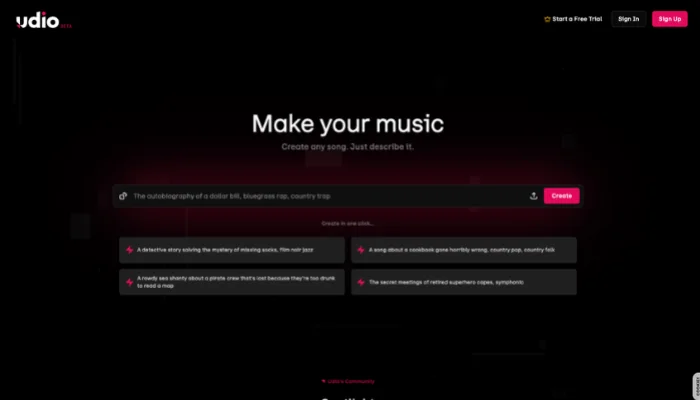
The platform is often compared with Suno because both can create full songs with vocals. The difference is that Udio leans heavily into experimentation. Its inpainting, remixing, and extension tools help users replace weak sections, continue a short idea, or push a track in a new direction.
Udio works well as a best AI song generator for users who enjoy testing variations. The strongest results often come after several attempts, so it fits a workflow where revision is part of the creative process.
Pricing
Free: $0 plan available
Standard: $10 per month
Pro: $30 per month
My Personal Verdict: Udio is my top pick for surgical editing; the inpainting feature allowed me to fix a single flat note without forcing a full-track regeneration.
InsMelo
InsMelo is built for users who want a direct path from idea to music. It supports several creation routes, including text to song, lyrics to song, and image to music. This makes it a practical option when the goal is to start quickly without learning a complex production workflow.
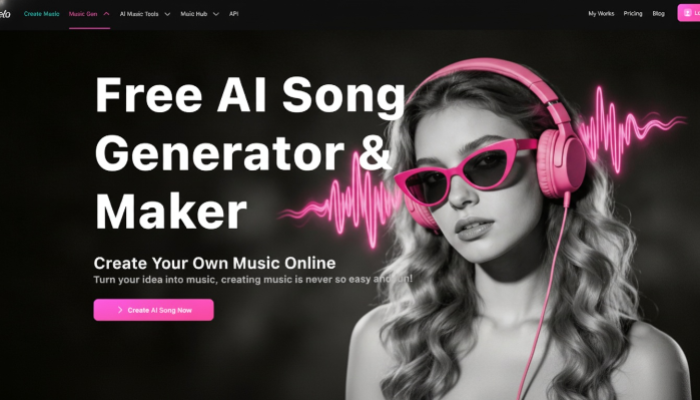
Compared with heavier music tools, InsMelo feels more accessible. It is especially relevant for users who want the best AI song creator with a simple interface and a clear output path. It also includes editing tools that help users continue working after the first generation.
Pricing
Free: $0, includes 3.5 credits
Pro: $8.99 per week, includes 200 credits
Ultra: $12.99 per week, includes 200 credits
My Personal Verdict: InsMelo's lyrics to song workflow is a standout for efficiency; I found its ability to sync emotional vocal delivery with specific rhyming patterns far more intuitive than more complex DAWs.
AIVA
AIVA is different from vocal-first AI song generators. It works more like a composition assistant and is strongest when the project needs instrumental music with structure and cinematic direction.
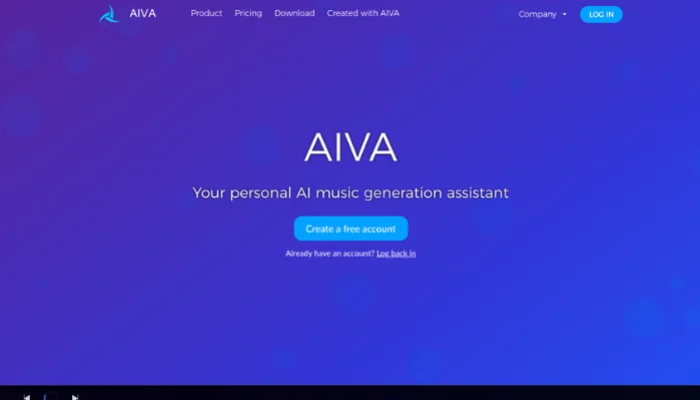
AIVA supports more than 250 styles and gives users ways to guide the result with audio or MIDI influence. This makes it useful for people who want AI-generated music that can be developed further in a DAW. It is not the best tool for vocal songs, but it has a clear role among the best AI music generators for composition.
Pricing
Free: €0 per month, non-commercial use only
Standard: €11 per month with annual billing
Pro: €33 per month with annual billing
My Personal Verdict: AIVA was the most useful tool in my test for composers who want MIDI export and DAW-based editing.
Soundraw
Soundraw is designed for royalty-free instrumental music. It is not trying to compete with Suno or Udio on vocal song generation. Instead, it focuses on customizable background tracks that can support content projects.

Soundraw's biggest advantage is its editing flow. Users can adjust the track structure, mood, genre, instruments, and length without opening a professional DAW. It is a practical choice when copyright clarity and background music matter more than vocals.
Pricing
Free Trial: Create and preview music before subscribing
Creator Monthly: $19.99 per month
Creator Annual: $16.99 per month with annual billing
My Personal Verdict: Soundraw excels in utility; I easily adjusted the song structure to match my video's climax without any awkward audio jumps or timing issues.
Mubert
Mubert is built for scalable AI music generation. It is a better fit for users who need a steady supply of background music than for users who want one highly emotional vocal song.
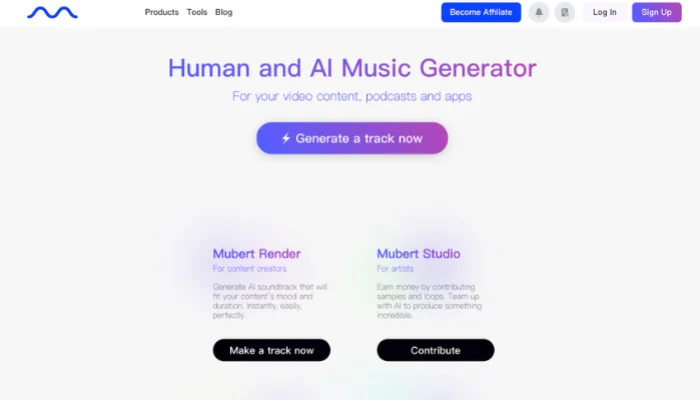
Mubert works well for prompt-based creation and app-style music needs. Its Render product focuses on royalty-free music for content, while its broader ecosystem includes streaming and API use. This gives it a stronger technical role than many simple AI music tools.
Pricing
Free: $0 per month, non-commercial use
Creator: $14 per month
Pro: $39 per month
Business: $199 per month
My Personal Verdict: In my stress tests, Mubert performed best in my loop-based background music test, keeping a consistent tone over longer playback without obvious mood shifts.
Beatoven.ai
Beatoven.ai is built around mood-based soundtrack creation. It is best understood as a scoring tool, not a full song generator. Its focus is music that supports a scene, story, or content timeline.
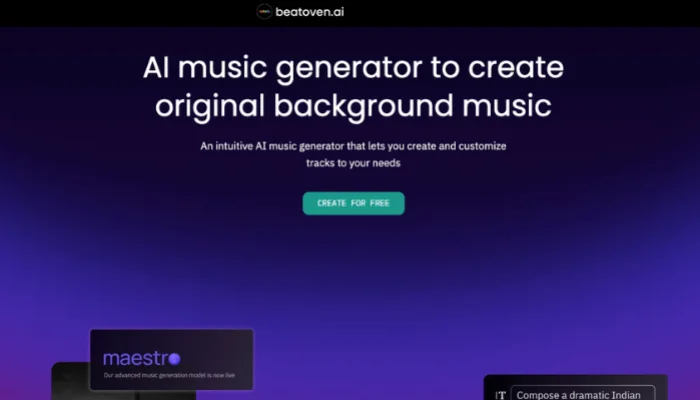
The platform's Maestro model and editing workflow make it useful for creators who need background music with emotional direction. It has a clear place in any AI music generator list focused on soundtrack use.
Pricing
Trial: Free plan available
Creator: $10 per month, or $100 per year
Visionary: $20 per month, or $200 per year
Buy Minutes: $3 per download minute
My Personal Verdict: Beatoven's mood-based transitions saved me hours of manual scoring, creating organic shifts from 'tense' to 'triumphant' within a single documentary scene.
ElevenLabs Music
ElevenLabs Music brings ElevenLabs' audio technology into music generation. Since ElevenLabs is already known for voice quality, its music product naturally stands out when vocal realism matters.

The platform can generate complete tracks from text prompts and supports multilingual output. It is newer than Suno or Udio as a dedicated AI music platform, but it is one of the more important tools to watch in 2026 because of its audio quality.
Pricing
Free: $0 per month
Starter: $6 per month, includes music commercial use
Creator: $22 per month
Pro: $99 per month
My Personal Verdict: The audio fidelity here is noticeably crisper; my studio monitors picked up much more high-end detail in ElevenLabs' tracks compared to older AI models.
Loudly
Loudly focuses on fast royalty-free music creation. It is more useful for practical track generation than for deep vocal songwriting.

Loudly is often positioned around quick creation, remixing, stems, and distribution. That makes it useful when users want to generate multiple versions and keep moving toward a finished content workflow. It is not as vocal-focused as Suno or Udio, but it has a clear place among top AI music generation tools.
Pricing
Free: $0 per month, limited use
Personal: $14.99 per month
Pro: $39.99 per month
Enterprise: Custom pricing
My Personal Verdict: Loudly is built for speed—I generated ten commercially viable ad variations in minutes by using their pre-set 'Song Formulas' to automate the build-up.
BandLab
BandLab is different from most tools on this list because it is a full music workspace with AI features inside it. SongStarter helps users create initial ideas, but BandLab's larger value comes from what happens after that idea is created.

Users can continue working inside BandLab Studio, record parts, edit arrangements, collaborate, and use additional production tools. This makes BandLab less like a one-click AI song generator and more like a music creation environment with AI support.
Pricing
Free: $0 per month, includes core creation tools
Membership Monthly: $14.95 per month
Membership Annual: $99 for the first year, then $149.50 per year
My Personal Verdict: BandLab works best as a creative spark; I used SongStarter to generate a basic rhythm and immediately layered my own live guitar tracks over it in the cloud DAW.
Choosing the Right Tool for Your Project
The best AI music generator should turn a prompt into music that can still be used after download. A polished preview is only the starting point. The tool also needs a practical editing flow and clear usage terms, especially when the final track will be published.
Use the guide below to match each platform with the result you expect from it.
For complete songs: Suno is the strongest starting point. It works well when you need vocals, structure, and a track that feels close to finished. Udio and InsMelo are also worth testing if you want a different creative workflow.
For simple song creation: InsMelo is a practical choice. It helps users move from a short idea to music without a complex setup, which makes it useful for anyone looking for the best AI song creator with a lower learning curve.
For creative refinement: Udio is a strong option. It gives users more room to reshape song sections, extend ideas, and explore different styles before choosing the final version.
For background music: Soundraw, Mubert, Beatoven.ai, and Loudly are easier to compare. They are better suited to projects where music supports the main content instead of becoming the main focus.
For composition: AIVA is the better fit. It works well when the project needs instrumental structure, cinematic direction, or DAW-friendly exports.
For music ideation: BandLab is useful when the first AI idea needs to become a larger project. It is stronger as a creative workspace than as a one-click generator.
For commercial use: Check the license before publishing. The best AI music generator for paid projects is not only the one that sounds good, but the one that gives clear usage rights.
FAQs about Best AI Music Generators
Conclusion
The best AI music generator in 2026 depends on the kind of music you want to create. Suno is the strongest overall pick for complete AI songs with vocals and structure, while Udio is better for creators who want more room to refine, extend, and reshape individual sections.
InsMelo AI Song Generator earns its place as a beginner-friendly option for users who want a faster path from prompt, lyrics, or image ideas to usable music. It is not a full DAW replacement, but it works well for creators who value a simple workflow and clear output options.
For background music, Soundraw, Mubert, Beatoven.ai, and Loudly may be better fits. For structured instrumental composition, AIVA remains a stronger choice. Before publishing or monetizing any AI-generated track, users should always review the platform's current licensing terms.